
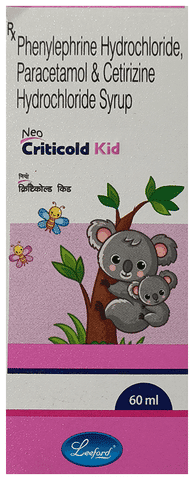
Criticold Kid Syrup
Leeford Healthcare Ltd
Cart discounts
Auto applied100% genuine medicines
Safe & secure payments
15 days easy returns
🧬Composition
Ambroxol (7.5mg) + Desloratadine (0.5mg) + Paracetamol (325mg) + Phenylephrine (2.5mg) + Zinc Gluconate (5mg)
Criticold Kid Syrup contains five active ingredients. Together, they help improve symptoms such as runny nose, cough, sneezing, watery eyes, sore throat, body ache, and fever. These symptoms are usually associated with respiratory conditions such as the common cold. Give Criticold Kid Syrup to your child by mouth with or without food. If your child develops an upset stomach, consider giving it with food. Always remember that the dosing schedule provided by your child’s doctor depends on the type of symptoms your child has, so make sure to follow the prescribed dose, time, and way strictly. Give Criticold Kid Syrup at a fixed time each day so that it gradually makes a place in your child’s daily routine, which will help you to remember. If your child vomits within 30 minutes of taking this medicine give the same dose again. However, never repeat the dose if it's already time for the next dose. Your child may start to feel better within a week of regular dosing. However, you must continue giving the medicine to your child to finish the complete prescribed course as stopping it abruptly may worsen your child’s condition. Some of the minor and temporary side effects that your child may experience while taking this medicine include nausea, vomiting, diarrhea, dry mouth, headache, and dizziness. Usually, these episodes subside once your child’s body adapts to the medicine. In case these side effects persist or become bothersome for your child, consult your child’s doctor without any delay. Narrate your child’s complete medical history to your child’s doctor, including any ongoing medicine regime or history of any allergy, heart problem, blood disorders, birth defects, airway obstruction, lung anomaly, skin disorder, liver impairment, and kidney malfunction. This information is critical for dose alterations and for planning your child’s overall treatment.